How κατέχω Operates From the Top Down #
There is a detail in 2 Timothy 2:26 that rarely survives the sermon it appears in.
Paul has just finished warning Timothy about quarrelsome servants of the Lord, about people who oppose sound teaching, about the need for gentle correction. And then he lands on something that should stop every reader cold: opponents of the truth have been “taken captive by him at his will” (2 Timothy 2:26, KJV).
Taken captive. By Satan. At his will.
Not at their will. Not at the moment they consciously chose to side against God. At his will. The will doing the capturing here is not the captive’s. The captive has been secured by an external agent operating in a manner sufficiently covert that they remain unaware of the arrangement.
This is not a peripheral observation. This is Paul’s clinical description of how κατέχω — the truth-suppression mechanism established in Romans 1:18 — produces its most sophisticated output: people who hold the truth down with both hands while sincerely believing they are lifting it up. People who suppress what they simultaneously profess. People who are, by every internal measurement they possess, defending God while functioning as instruments of the opposition.
You have to sit with the irony for a moment. These are not pagans worshipping Baal in a high place. These are not Gentile philosophers dismissing resurrection in the Areopagus. These are opponents within the covenant community, handling Scripture, using theological vocabulary, correcting error — and doing all of it from inside a cage they cannot see, at the direction of a warden whose existence they would strenuously deny.
The cage has always been the comfortable part to miss. You cannot detect a prison from inside it when the prison has convinced you that you are the one holding the keys.
The Pattern That Predates the Doctrine #
What Paul names in 2 Timothy 2:26 is not a first-century innovation. It is the operating procedure of every suppression event recorded in Scripture. The mechanism does not generate new behaviors. It generates the same behavior in every generation: truth arrives, threatens the structure, and the structure deploys its authorized defenders to eliminate the threat — all while calling it faithfulness.
What changes is the costume. The mechanism is always the same.
And if you want to watch it work at full operational capacity, the Old Testament is your case study.
Jeremiah and the Cistern #
Jeremiah 38 is not subtle.
The prophet has been delivering God’s word to Jerusalem during the Babylonian siege — specifically, the word that the city will fall, that resistance is futile, that surrender preserves life. This is not popular theology. It is also, as subsequent history confirmed with ruthless precision, accurate theology.
The response from the princes is instructive: “Let this man be put to death, for he is weakening the hands of the soldiers who are left in this city, and the hands of all the people, by speaking such words to them. For this man is not seeking the welfare of this people, but their harm” (Jeremiah 38:4).
Read that indictment carefully. They are not arguing that Jeremiah is wrong. They are arguing that Jeremiah is harmful. The distinction matters enormously, because it means the suppression mechanism has shifted the debate from the question of truth to the question of effect. Whether the word is accurate is irrelevant. Whether the word is dangerous is the operative concern.
This is κατέχω operating at institutional level with remarkable sophistication. The princes are not lying when they say they want the city’s welfare. They genuinely believe suppressing this particular truth serves the people. They have been taken captive by a framework that reframes the corrective word as a weapon against the community it is actually trying to rescue.
So they throw him in the cistern. Which was empty of water. Which means he sank into the mud.
There is something appropriately absurd about the image that deserves acknowledgment. The men holding the truth captive are themselves in a besieged city whose walls are about to come down. The man in the cistern was the only one in Jerusalem who knew what was actually happening and what to do about it. The ones standing above the cistern looking down at the prophet sinking into the mud were the ones about to become Babylonian prisoners.
The captors were more captive than the captive.
This is not a minor irony. This is the diagnostic signature of κατέχω operating institutionally: the mechanism produces a precise inversion of the actual situation. The people doing the imprisoning are the imprisoned. The ones claiming authority are the ones under judgment. The structure defending itself is the structure that has already failed — it simply has not received the notification yet.
Jeremiah eventually gets pulled out of the cistern by Ebed-melech, an Ethiopian eunuch who takes ropes and old rags to pull him up gently (Jeremiah 38:11-12). The man who rescues the prophet is not a priest, not a prince, not a member of the institutional apparatus. He is a foreigner, a servant, an outsider — the last person the princes would have expected God to deploy as the instrument of rescue.
The pattern will repeat.
Joseph and the Pit #
Genesis 37 has a detail easy to read past: after Joseph’s brothers throw him into the pit, they sit down to eat (Genesis 37:25).
They threw their brother into an empty pit — the same Hebrew word used for Jeremiah’s cistern — and then had lunch.
There is a particular kind of numbness that operates in people who have suppressed a corrective reality with sufficient thoroughness. They don’t experience what they’re doing as monstrous. They experience it as resolved. The problem has been handled. The threat to the structure has been neutralized. Now they can eat.
Joseph’s brothers are not random villains. They are the sons of the patriarchal family. They are, by every institutional measure available, the covenant community. They are the ones who should have recognized in Joseph what God was doing. Instead, they recognized it precisely — “Here comes this dreamer. Come now, let us kill him” (Genesis 37:19-20) — and responded to the recognition by attempting to destroy what they recognized.
This is not ignorance. This is suppression. The truth was not hidden from them. They saw it, named it, and moved against it. “Here comes this dreamer” is not the language of men who don’t understand what they’re dealing with. It is the language of men who understand perfectly and have decided the structure matters more than the revelation.
And then they sat down to eat.
The mechanism that produces that kind of equanimity — that permits a man to have lunch while his brother sits in a pit — is not a minor spiritual problem. Paul’s description of those “taken captive at his will” is, among other things, a description of men eating sandwiches next to a cistern that contains the only one among them who has actually heard from God.
The Ishmaelites arrive and purchase Joseph for twenty pieces of silver. His brothers collect the transaction and bring the tunic back to their father. They have been thorough. The threat has been removed, the evidence obscured, the story controlled.
Twenty years later Joseph stands in the second-highest position in Egypt, and his brothers bow before him — which is where you realize that God was not absent from the pit. He was managing a timeline the brothers could not see and would not have accepted if they had been shown it. The suppression did not alter the destination. It only made the route longer and the arrival more devastating to everyone who had congratulated themselves on having handled the problem.
Elijah and the Queen #
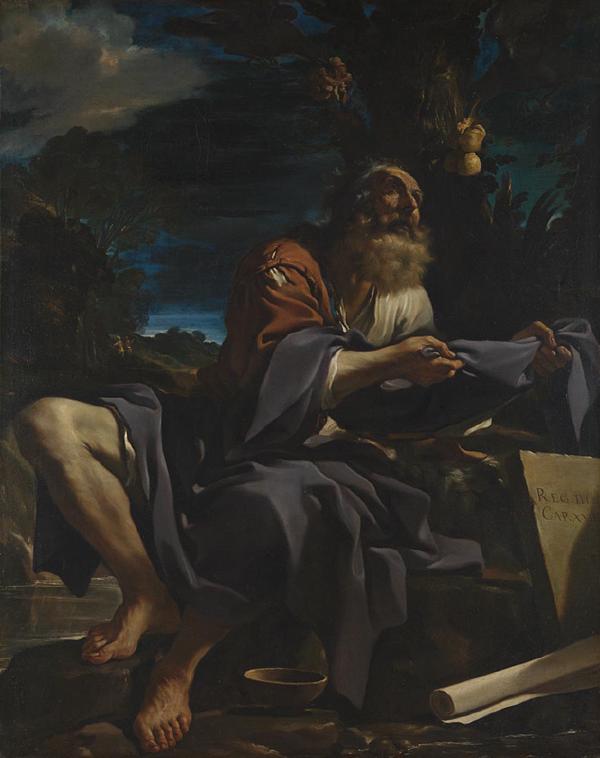
1 Kings 19 is psychologically the most honest account of what sustained institutional persecution does to the truth-bearer.
Elijah has just come off Carmel — arguably the most theologically decisive confrontation in Israel’s history. Eight hundred and fifty prophets of Baal and Asherah. One prophet of God. Fire from heaven, the people falling on their faces, the false prophets executed at the brook Kishon. By every conceivable measure, the suppression mechanism has been publicly and catastrophically exposed.
And then Jezebel sends a message: By this time tomorrow you will be dead.
And Elijah runs.
This is not cowardice in the ordinary sense. This is what happens when someone has been operating as the lone corrective voice against an entrenched institutional apparatus for long enough that a single threat, even after Carmel, produces total collapse. He runs into the wilderness, sits under a juniper tree, and asks God to let him die (1 Kings 19:4). “It is enough. Now, O LORD, take away my life, for I am not better than my fathers.”
Notice what Carmel did not fix. The institutional apparatus was still operational. Jezebel was still on the throne. The eight hundred and fifty prophets were replaceable — the structure that produced them was not dismantled. And Elijah knew it. The public vindication on Carmel had not changed the fundamental situation, which was that the mechanism of suppression had full royal authorization and he had none.
He ends up at Horeb, in a cave, and God asks him: “What are you doing here, Elijah?”
The answer: “I have been very jealous for the LORD, the God of hosts. For the people of Israel have forsaken your covenant, thrown down your altars, and killed your prophets with the sword, and I, even I only, am left, and they seek my life, to take it away” (1 Kings 19:10).
I alone am left.
This is the subjective experience of institutional κατέχω. Not just opposition from without. Not just persecution by pagan forces. The covenant community — Israel — has forsaken the covenant, destroyed the altars, killed the prophets. The institution has turned completely and deployed its full apparatus against the corrective word. And the result, from inside that situation, is the absolute certainty that you are the last one standing.
God’s response is not a sermon. It is a provision — food, water, sleep — followed eventually by a correction of the perception: “Yet I will leave seven thousand in Israel, all the knees that have not bowed to Baal” (1 Kings 19:18).
Seven thousand. Not one. Seven thousand who remained faithful while Elijah experienced total isolation.
The suppression mechanism does not only imprison its victims in false frameworks. It imprisons the truth-bearer in a false perception of the situation. Elijah’s isolation was real — he was genuinely alone in that cave. What was not accurate was his assessment that the isolation was total. κατέχω, when operating at full institutional capacity, produces a sensory environment in which the suppression appears comprehensive and permanent. It is neither.
The Consistent Irony #
Step back from all three and the pattern becomes almost geometrically precise.
In every case, the suppression mechanism operates through the authorized representatives of the covenant structure. Not pagans. Not obvious enemies. Not people who have openly renounced God. The princes of Judah. The sons of Jacob. The prophets of Baal installed by the queen. In every case, the institutional apparatus claims divine sanction for the suppression. In every case, the one being suppressed is the one actually carrying the word of God. And in every case — and this is the part that should disturb any honest reader — the suppressors are more thoroughly imprisoned than the one they are suppressing.
The princes are in a besieged city. Joseph’s brothers will bow before the man they sold. Jezebel will be eaten by dogs at the wall of Jezreel (2 Kings 9:36) while Elijah is taken up in a whirlwind.
The mechanism always loses. It loses spectacularly, repeatedly, and with an irony so consistent that it should constitute its own category of historical evidence. And yet it keeps operating. Because the characteristic feature of κατέχω is that it operates beneath the awareness of the ones it has captured, which means the ones most thoroughly taken captive at Satan’s will are also the ones most sincerely convinced they are operating for God’s purposes.
This is not a minor theological nuance. This is the diagnostic that explains why Paul’s warning in 2 Timothy 2:26 is not primarily addressed to pagans. It is addressed to the church. The people being taken captive by the opponent at his will — who require gentle correction in the hope that God may grant them repentance leading to a knowledge of the truth — are people inside the covenant community who have been secured by a mechanism they cannot detect, operating at the will of an agent they would deny serves them in any way.
Stephen Names the Pattern #
Acts 7 is the moment Scripture stops merely illustrating the mechanism and starts explaining it.
Stephen’s speech before the Sanhedrin is not a defense. It is a prosecution. He is the accused delivering the indictment. And the core of the indictment is not that the Sanhedrin has made a theological error. It is that the Sanhedrin is the latest iteration of a pattern that has been operating throughout Israel’s history.
He begins with Abraham, moves through Joseph — noting, with what must have been excruciating precision, that Joseph’s brothers were jealous of him and sold him into Egypt — continues through Moses, through the wilderness, through David and Solomon, and arrives at the prophets. Then he says it directly:
“You stiff-necked people, uncircumcised in heart and ears, you always resist the Holy Spirit. As your fathers did, so do you. Which of the prophets did your fathers not persecute? And they killed those who announced beforehand the coming of the Righteous One, whom you have now betrayed and murdered” (Acts 7:51-52).
You always resist. Not occasionally. Not in moments of particular weakness. The resistance is characteristic, persistent, and transmitted across generations through the same mechanism. The fathers persecuted the prophets. The sons killed the one the prophets announced. The pattern is not interrupted by the arrival of the Messiah. It is completed by it.
The Sanhedrin’s response is the mechanism’s operating signature: “they cried out with a loud voice and stopped their ears and rushed together at him” (Acts 7:57).
They literally covered their ears. Which means they heard him. They heard the argument, recognized where it was going, and responded not by refuting it but by producing sufficient noise to drown it out. This is κατέχω at its most physically literal: the truth arriving, the institutional apparatus registering the threat, and the suppression occurring in real time with hands over ears and voices raised.
They drag him outside and stone him.
And Saul — who will become Paul, who will write 2 Timothy 2:26 — stands there holding the coats.
The man who will eventually describe being taken captive by Satan at his will watches the mechanism operate at full capacity, approves of it, and will not understand what he witnessed until the Damascus road removes his own version of the same suppression.
The Summit of the Pattern #
Which brings us to John 11.
Lazarus is dead. Jesus has raised him. The report reaches Jerusalem. And the chief priests and Pharisees convene a council. What is their question? Is Lazarus actually alive? Is the report credible? Is the theological implication worth examining?
No.
“What are we to do? For this man performs many signs. If we let him go on like this, everyone will believe in him, and the Romans will come and take away both our place and our nation” (John 11:47-48).
The signs are not in dispute. They say “this man performs many signs” — not claims to perform or allegedly performs but performs. The evidence of the resurrection is not the question. The question is institutional: what does this evidence do to our place?
Our place. The Greek is topos — the location, the position, the territory. The suppression mechanism in John 11 is not about theology. It is about real estate. The Sanhedrin is protecting a position, and the position requires that the signs not produce the believing they are designed to produce. So the decision, articulated by Caiaphas with an efficiency that should make everyone profoundly uncomfortable, is that one man must die to preserve the structure.
This is the pinnacle of institutional κατέchō. The one performing the signs is the one the signs are about — the resurrection and the life, standing in a room full of people who have just received credible reports that he raised a dead man, and the conclusion they reach is that he must be killed before the public loses confidence in the institution.
And they are simultaneously correct and catastrophically wrong. Correct that the signs will undermine their institutional authority. Wrong about what institutional authority actually is and who actually has it. The suppression operates with perfect self-consistency and produces the precise result it is most trying to prevent: the death of Jesus, the resurrection of Jesus, and the dissolution of the very structure they were trying to protect.
The Temple falls in AD 70. Caiaphas does not survive to see it. But the mechanism he deployed with such institutional confidence writes his theological epitaph two generations later when the Romans come and take away both their place and their nation — the exact outcome his suppression of Jesus was designed to prevent.
The mechanism always loses. It never knows it is losing.
The Absurdity You Were Promised #
Step back now and look at what Romans 1:18 describes: people “who by their unrighteousness suppress the truth.”
And then look at 2 Timothy 2:26: people “taken captive by him at his will.”
Now place these two descriptions over the characters just examined. The princes suppressing Jeremiah while their city falls. Joseph’s brothers eating lunch next to the pit that contains God’s appointed deliverer. Elijah’s persecutors operating a religious apparatus that will be dismantled within a generation. The Sanhedrin covering their ears while the argument they cannot refute gets delivered by the man they are about to kill. Caiaphas calculating that killing Jesus preserves the Temple while engineering the very chain of events that destroys it.
People taken captive at Satan’s will, suppressing the truth by their unrighteousness, doing so with complete sincerity, full institutional authority, and the absolute certainty that they are serving God — and being wrong about every element of that certainty simultaneously.
The doctrine of “once saved, always saved” is the contemporary iteration of this pattern. It is not held by people who consciously decided to suppress the gatekeeper question. It is held by people who are, by Paul’s own clinical description, taken captive at the opponent’s will — people who handle Scripture with genuine reverence, who love God as they understand him, who would strenuously deny that any suppression mechanism is operating — while the mechanism operates beneath their awareness with complete efficiency, producing exactly the theological output that serves the one who installed it.
This is not a comfortable observation. It was not a comfortable observation when Jeremiah made it from inside a cistern. It was not comfortable when Stephen made it to men covering their ears. It is not comfortable now.
But the question κατέchō most needs you not to ask is the one that determines everything: Which gatekeeper operates in your life presently?
The princes of Judah had an answer. So did Joseph’s brothers. So did the Sanhedrin. They were all wrong in the same direction, for the same reason, by the operation of the same mechanism.
And they were all, by every internal measurement they possessed, absolutely certain they were right.