Somebody asked Jesus to settle an inheritance dispute.
It’s a reasonable request. A man in the crowd wants his brother to divide the family estate, and rabbis handled that kind of thing routinely. Jesus refuses — “who made me a judge or arbitrator over you?” (Luke 12:14) — and then, instead of moving on, tells a story that has nothing to do with inheritance law and everything to do with what the man was actually asking for.
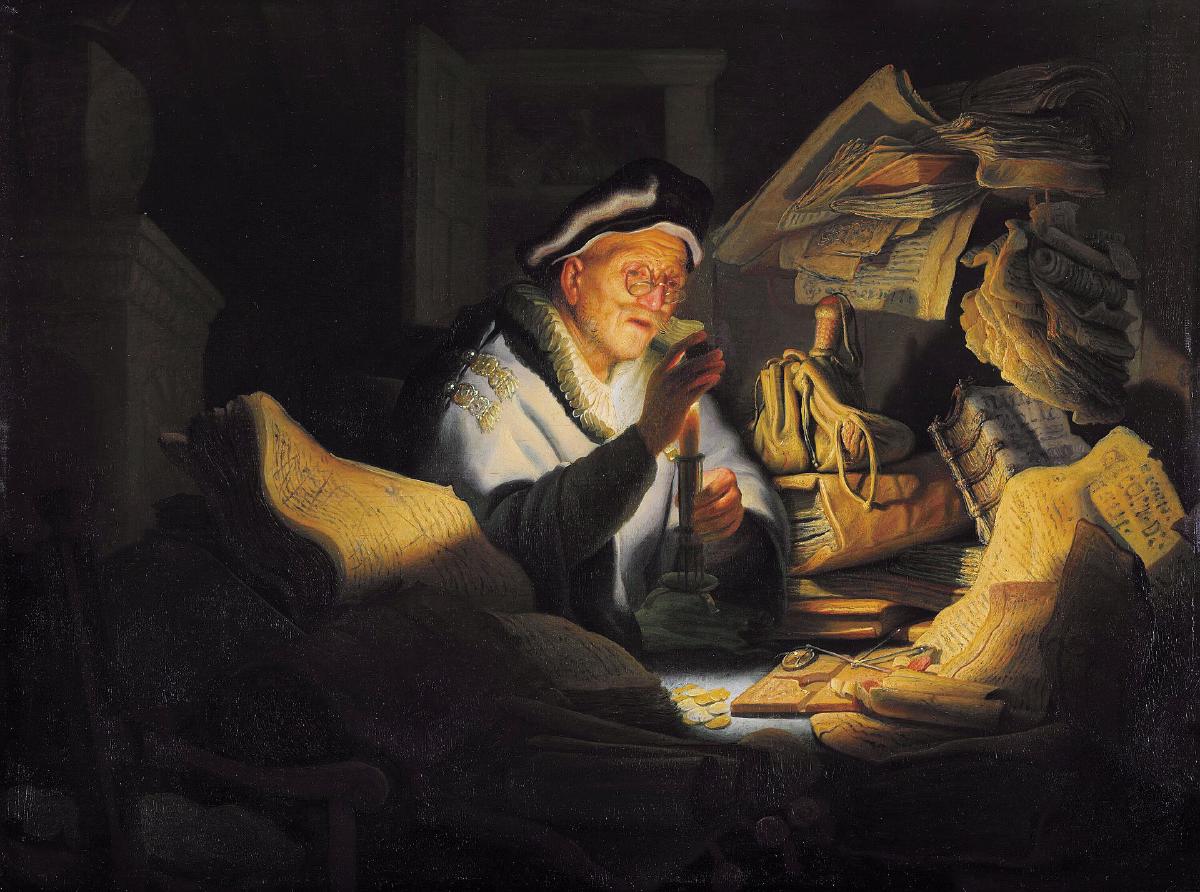
A rich man’s land produces well. Unusually well. So well that his existing storage can’t hold it, which is the kind of problem most people would like to have. He thinks it over and lands on a plan: tear down the barns, build bigger ones, store everything, and then relax. “Soul, you have ample goods laid up for many years; relax, eat, drink, be merry” (Luke 12:19).
God’s response in the parable is four words long and completely unsentimental: “Fool! This night your soul is required of you” (Luke 12:20).
The barns were never finished. That’s the detail worth sitting with. He didn’t die enjoying the surplus. He died during the construction phase, in the gap between having enough and building somewhere to put it — which is, statistically, where most people spend their entire lives.
The Part Nobody Notices #
Here is what makes Luke 12 remarkable, and it has nothing to do with the parable itself.
Read what comes next.
Jesus finishes the story about the man who built storage, turns to his disciples, and says: don’t be anxious about your life, what you’ll eat, what you’ll wear. Consider the ravens. “They neither sow nor reap, they have neither storehouse nor barn, and yet God feeds them” (Luke 12:24).
Neither storehouse nor barn.
He used the same word. The rich fool’s entire life strategy was the construction of barns. The very next illustration Jesus reaches for is a creature that has no barn and gets fed anyway. These are not two teachings that happened to land near each other in the manuscript tradition. This is one argument with a setup and a punchline, and the punchline is a bird.
The man who built storage died before he could use it. The animal that builds nothing eats every day.
Jesus put those side by side deliberately, and then let the comparison do its own work.
The Original Barn Incident #
If the ravens make the point, Exodus makes it humiliating.
Israel is in the wilderness with no food supply and no agricultural infrastructure. God provides bread from heaven, daily, with one instruction attached: gather what you need for today, and don’t leave any of it until morning (Exodus 16:19). The provision is guaranteed. The storage is prohibited. This is not a complicated arrangement.
They stored it anyway.
“But they did not listen to Moses. Some left part of it till the morning, and it bred worms and stank” (Exodus 16:20).
Consider what actually happened here. God performed a daily, visible, undeniable miracle — food materializing on the ground every morning, on schedule, without fail. And the response of the people receiving it was to hide some of it in case the miracle stopped. They hedged against God. With God’s own bread. Which then rotted, in their tents, overnight, as a direct consequence.
There is something almost tender about how immediate the correction was. No lengthy judgment. No prophetic rebuke. Just worms, by morning, in the exact amount they had failed to trust him with.
And then — this is the part that should stop you — the manna appeared again the next day. And the day after that. For forty years (Exodus 16:35). The provision never failed once. The hoarding never became necessary a single time. Forty years of uninterrupted evidence, and the rotting bread was apparently the only argument that landed.
What Storage Actually Is #
Put these together and something clarifies.
Anxiety about provision does not look like anxiety when you have resources. It looks like prudence. It looks like planning. It looks like a man with a good harvest making sensible decisions about infrastructure. Nobody watching the rich fool draw up barn plans would have diagnosed him with a spiritual problem — they’d have asked him for financial advice.
The disciples in the boat had no bread to store, so their anxiety showed up as worry (Mark 8:14-21). The rich fool had surplus, so his showed up as construction. Israel had daily miraculous provision, so theirs showed up as a Tupperware strategy. Same mechanism. Different budgets. The resource level determines the symptom, not the disease.
Which means the presence of a storehouse tells you nothing about whether the storehouse is the problem. Joseph built storehouses in Egypt under direct divine instruction and saved two nations doing it (Genesis 41:35-36). The barn isn’t the issue. What the barn is for is the issue — and the rich fool says it out loud, which is the only reason we can diagnose him.
Read his sentence again: “Soul, you have ample goods laid up for many years; relax.”
He is talking to himself. He is the only party in the conversation. There is no reference to God, no reference to the land that produced the crop, no reference to anyone who might eat from the surplus. He has built a system designed to make him independent of needing anything from anyone — and he narrates it to his own soul as though his soul were his to instruct.
That night, it turned out it wasn’t.
The Question Underneath #
The man in the crowd wanted his inheritance divided. Jesus refused the request and answered the question underneath it, which was never about property law.
What he wanted was security. He believed the security was in the estate, and he believed the obstacle was his brother, and he was wrong about both in a way that no ruling from Jesus could have corrected. So Jesus told him about a man who got the security he wanted, in full, ahead of schedule, with surplus — and lost it in a single night while the paint was still drying.
Then he pointed at a bird with no barn and no plan and no anxiety about either.
The ravens aren’t held up as an example of faith. Ravens don’t have faith. They’re held up as an example of something simpler and more uncomfortable: a creature that receives daily provision without requiring a guarantee first. No storehouse. No hedge. No backup arrangement in case the arrangement fails.
Israel had forty years of proof and still hid bread in their tents. The disciples had twelve baskets and seven baskets and still worried about lunch. The rich fool had a harvest that exceeded his storage capacity and died building somewhere to put it.
The evidence was never the problem. It has never once been the problem.
The question is what you’re building — and who you’re talking to when you tell yourself it’ll be enough.