The Jar That Never Filled Up #
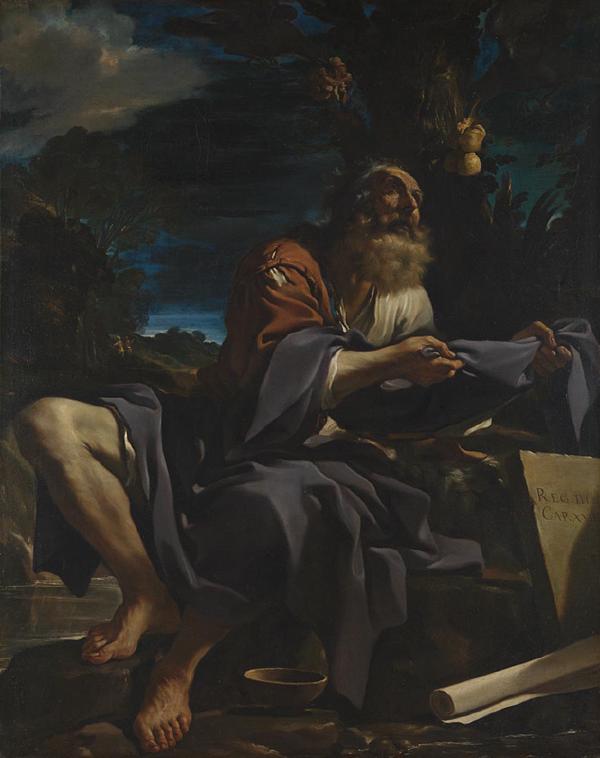
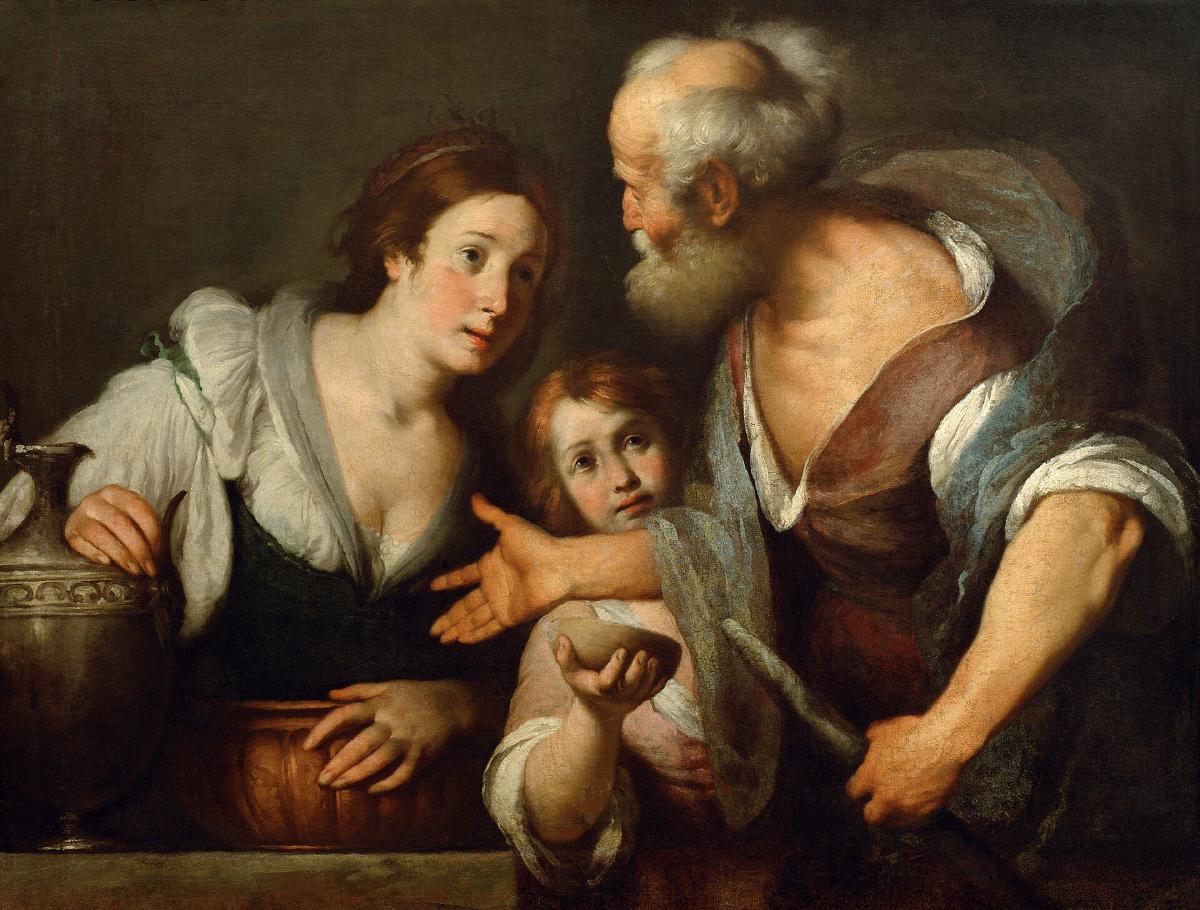
She was gathering sticks when he found her.
Not baking. Not stocking a pantry. Gathering sticks, because that’s what you do when you’re down to a single meal and you’ve already decided how it ends — you build one last fire, you make the bread, you and your son eat it, and then you die (1 Kings 17:12). She says this plainly, to a stranger, with no self-pity in the wording. It’s not a complaint. It’s an itinerary.
And into that itinerary walks Elijah, who has just spent an unspecified stretch of time being fed by ravens at a brook that has now dried up (1 Kings 17:1-9), and who opens with a request that should be, by any reasonable standard, monstrous: bring me water, and bring me bread, and make it for me first (1 Kings 17:13).
First. Before her son. Before herself. A foreign prophet, showing up at the exact moment of a widow’s terminal meal, asking to eat before the child does.
The Promise With Nothing Behind It #
Elijah doesn’t soften the request with sympathy. He attaches a promise instead: “the jar of flour shall not be spent, and the jug of oil shall not be empty, until the day that the LORD sends rain upon the earth” (1 Kings 17:14).
There is no collateral on this promise. No demonstration first, no partial proof, no test batch. She is being asked to give away the literal last of what she has, on the word of a man she’s never met, representing a God who isn’t hers — she’s a Sidonian, from Baal’s own territory, in the middle of a famine his prophet had personally announced (1 Kings 17:1). The famine that’s about to kill her was ordered by the God now asking her to trust him with her last handful of flour.
And she does it. “And she went and did as Elijah said” (1 Kings 17:15).
The text doesn’t record a moment of decision. No wrestling, no negotiation, no request for a sign. She goes and does it, and then the detail that makes this whole account strange: “And the jar of flour was not spent, neither did the jug of oil fail, for many days” (1 Kings 17:15-16).
What the Jar Actually Did #
Notice what didn’t happen. The jar did not refill overnight while she slept. There’s no scene of her waking up to a restocked pantry. What happened is narrower and, honestly, stranger: every time she reached in, there was enough for that day. Not more. Not a surplus she could have measured and celebrated. Just — enough, again, every single time, for as long as the famine lasted.
Which means the miracle was not a single event she could point to and be done with. It was a sustained condition she had to keep testing by continuing to pour. If she’d stopped scooping out of fear that this time it wouldn’t be there, she’d never have found out it would have been. The provision only became visible through the act of continuing to spend what looked, every single time, like the last of it.
This is not how the Exodus generation handled comparable provision. They were told not to store the manna and stored it anyway, and it rotted by morning as a direct consequence of trying to guarantee tomorrow with today’s gift (Exodus 16:20). The widow does the opposite. She doesn’t try to bank the flour, ration it into a hoard, or hold some back “just in case” — there’s no “just in case” available to her. She simply keeps using it, and it keeps being there, and the two facts turn out to be connected in a way that never occurs to Israel with the manna and occurs to her immediately.
The people with the visible, repeatable, forty-year miracle hedged against it anyway. The Gentile widow with a single unverified promise from a stranger just kept scooping.
The Second Death in the Same House #
The story isn’t finished being uncomfortable.
Some time later, the woman’s son dies (1 Kings 17:17). Not the famine death she’d already made peace with back when she was gathering sticks — a different death, sudden, in a house that had just spent an unknown number of days being sustained by an ongoing miracle. Her response to Elijah is sharp: “What have you against me, O man of God? You have come to me to bring my sin to remembrance and to cause the death of my son” (1 Kings 17:18).
Read what she’s actually saying. She has watched flour that shouldn’t exist keep producing bread, day after day, for herself and this same child — and her son’s death still registers, immediately, as judgment. Not as an anomaly inside an otherwise-secured arrangement. As confirmation that the arrangement was never as secure as it looked, and that she’d been foolish to relax into it.
The jar was still full. The promise about the jar had not failed. And she still concluded, the instant something else went wrong, that the whole thing had been a trap.
Elijah takes the boy, prays, and the boy revives (1 Kings 17:22). The chapter that opened with a woman gathering sticks for her own funeral pyre closes with her son breathing again, in a house that has now witnessed two impossible reversals — flour that wouldn’t run out, and a child who wouldn’t stay dead — inside the same short stretch of time.
What the Jar Was Actually Testing #
Put the two events together and the point sharpens.
The flour wasn’t primarily a test of God’s ability to provide. That was never actually in question — ravens had already been managing Elijah’s groceries at a brook, and God had just demonstrated, repeatedly, across an entire chapter, that resource scarcity is not a constraint he operates under. The test, if it was a test at all, was whether the widow would keep reaching into the jar as though the promise were still active, meal after meal, without needing to re-verify it each time.
She passed that test daily. Then a different crisis landed, and she treated it as a verdict on the first one.
This is the same mechanism at a different address than the rich fool building barns or the disciples panicking about bread in a boat that had already fed nine thousand people between the two of them. Different symptom, same disease. The fool trusted barns because he had a harvest to store. The disciples trusted worry because they had no bread to store. The widow trusted the jar every single day, without exception — which makes what happens next worth sitting with.
The Uncomfortable Part #
Here’s what the account never resolves, and probably shouldn’t: nothing about the boy’s death is explained. Scripture doesn’t tell you why he died, doesn’t frame it as punishment or lesson, doesn’t hand the widow — or you — a tidy mechanism connecting the flour’s faithfulness to the son’s fragility. It just places both realities side by side and lets you sit with the fact that ongoing provision was never a warranty against catastrophe.
The jar not running out was never a promise that nothing else would run out. It was a much narrower promise than that, kept with total precision, about one specific thing. She had been given exactly what was promised and nothing else — and the moment something outside the promise’s scope went wrong, she treated the whole arrangement as void.
Which raises the actual question sitting underneath the flour, the ravens, and the barns: how much of what you call broken trust is actually just discovering, the hard way, that the promise you were given was never as broad as the one you assumed you’d signed up for.