Four words in the King James, and they describe something that has never happened before or since.
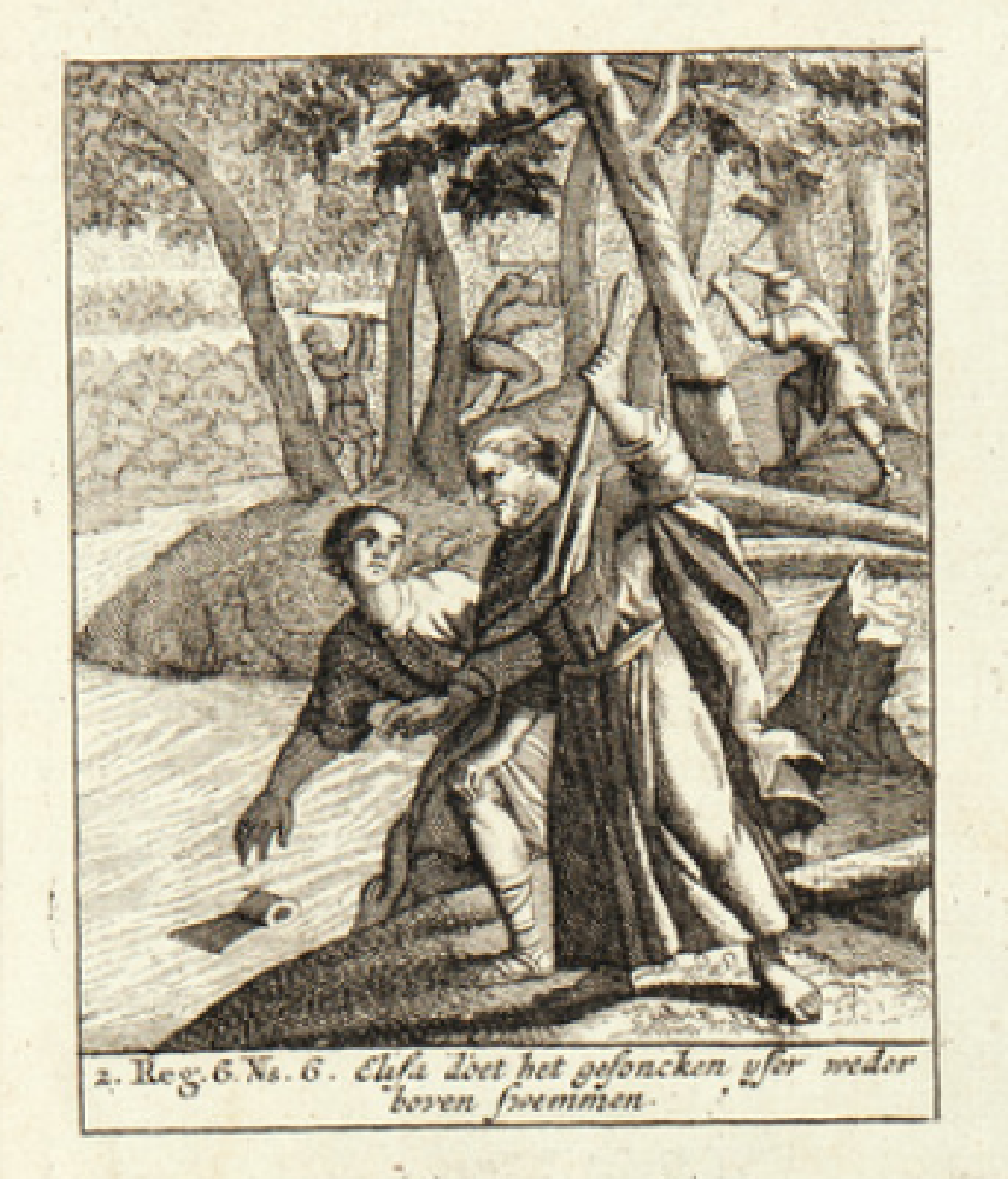
“And he cut down a stick, and cast it in thither; and the iron did swim” (2 Kings 6:6).
Iron does not swim. Iron has never swum. Buoyancy is not a matter of divine preference or moral standing — it is a relationship between density and displacement, and an iron axe head loses that argument in every river on earth. For that particular piece of iron, on that particular afternoon, in that particular stretch of the Jordan, the argument was simply suspended.
For an axe head.
What the Crisis Actually Was #
The setup is almost aggressively mundane. The sons of the prophets — a guild of students living under Elisha’s teaching — tell him their quarters are too small. They want to go to the Jordan, cut timber, and build somewhere bigger to live (2 Kings 6:1-2). Elisha approves. One of them asks him to come along. He does.
They start felling trees. And while one man is swinging, the iron head comes off the handle and goes into the water.
“Alas, my master! for it was borrowed” (2 Kings 6:5).
That’s the emergency. A borrowed tool, in a river, during a building project. No famine. No siege. No invading army, no dying child, no national crisis, no prophetic confrontation with a king. A guy lost a piece of equipment at work.
And Elisha treats it as worth his attention.
The Company This Story Keeps #
Here is what makes the passage genuinely strange, and it has nothing to do with floating metal.
Read what comes immediately before it.
Two chapters earlier, a widow is about to lose both her sons to creditors as debt slaves, and Elisha multiplies a single jar of oil until she can sell enough to clear the debt and live on the rest (2 Kings 4:1-7). Then a woman’s son dies and Elisha raises him (4:32-37). Then a pot of stew is poisoned and a company of men are about to eat it, and he neutralizes it mid-meal (4:38-41). Then twenty loaves feed a hundred men with food left over (4:42-44). Then Naaman — commander of the Syrian army, a man whose disease carried social and diplomatic weight across two nations — is healed in the Jordan after being told to do something insultingly simple (5:1-14).
Death. Debt slavery. Poison. Hunger. International politics.
And then, in the very next movement of the narrative, with no change in tone and no narrative apology: a borrowed axe head fell in the water.
Scripture does not downshift. There’s no editorial signal that this one is smaller, no “and also, in a minor incident.” The account is given the same weight, the same prophet, the same seriousness of divine attention as the raising of a dead child. The text simply declines to rank them.
Which means either the compiler of Kings had no sense of proportion, or proportion isn’t operating the way we assume it does.
The Stick #
Elisha’s method is worth noticing, because it is conspicuously unimpressive.
He asks where it fell. The man shows him the spot. Elisha cuts a stick and throws it in.
No extended prayer. No raised staff, no invocation, no parting of the water, nothing that resembles the theatrical vocabulary of prophetic power. He cuts a piece of wood off a tree — they are, after all, standing in the middle of a logging operation — and tosses it at a specific place in the river. And a chunk of iron that had been sitting on the riverbed comes up to meet it.
This is not the only time the instrument is this ordinary. Elisha had just told Naaman to wash in this same river seven times, and Naaman had nearly gone home furious about how underwhelming the prescription was (2 Kings 5:11-12). He’d expected a gesture. He got plumbing instructions.
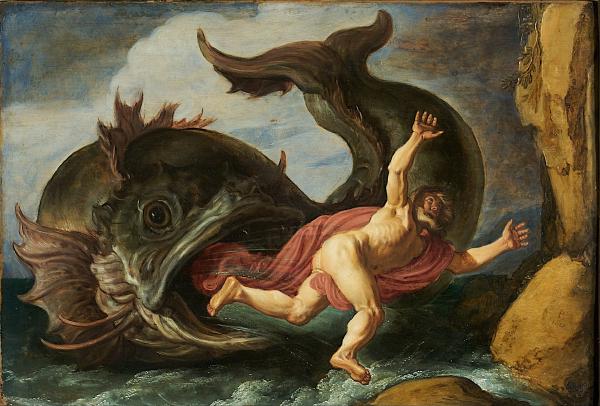
The pattern holds across Scripture with a consistency that starts to feel deliberate. Ravens carry bread to a prophet at a brook (1 Kings 17:4). A jar of flour produces exactly one meal’s worth, repeatedly, for months (1 Kings 17:16). A fish, a plant, a worm, and a wind are each assigned a specific task in Jonah and execute it precisely (Jonah 1:17; 4:6-8). Five loaves and two fish feed five thousand with twelve baskets over (Matthew 14:17-20).
Nothing in the toolkit is impressive. Everything in it is exact.
And now a stick, thrown at a river, to retrieve a tool.
The Thing About Borrowed Tools #
The detail the man volunteers under pressure tells you what he was actually afraid of.
He doesn’t say “I lost the axe.” He says it was borrowed. His first instinct, in the half-second after watching the iron disappear, is not inventory. It’s obligation. Someone lent him something, he can’t produce it, and he has no way to make that right — these are students living in cramped quarters, not men with the means to replace ironwork on demand.
So the size of the crisis depends entirely on where you’re standing. From a distance: a hand tool, in a river, replaceable. From inside his life: a debt he can’t pay to someone who trusted him, incurred in the middle of doing exactly what he was supposed to be doing.
Scripture keeps doing this. It keeps declining to evaluate the size of a problem from the outside.
The Category That Doesn’t Exist #
Put the sequence together and something uncomfortable emerges.
If a dead child and a lost axe head receive the same prophetic attention, in the same narrative register, from the same God, then the category most people operate in — this is too small to bother him with — is not a category Scripture recognizes.
That instinct feels like humility. It usually isn’t. It’s an assessment, made by the person in the situation, about what qualifies for divine attention — and it requires knowing the threshold. It requires being confident enough about where the line sits to place your own problem beneath it.
Nobody has that information. The axe head story exists, in part, to demonstrate that nobody has that information.
Jesus puts the same logic in commercial terms: two sparrows sold for a copper coin, and not one of them falls without the Father knowing, and the hairs of your head are numbered (Matthew 10:29-31). Sparrows were the cheapest meat available — the poverty option, the thing you bought when you couldn’t afford anything else. The argument isn’t that sparrows are secretly valuable. It’s that price and attention are unrelated variables, and everyone who assumes otherwise has the equation wrong.
What the Iron Proves #
The miracle in 2 Kings 6 is not proportional to the crisis. That’s the whole point of recording it.
Suspending buoyancy is not a smaller act than parting a sea or stopping the sun. Physics doesn’t scale its resistance according to the significance of the occasion. Whatever it takes to make iron rise through water is exactly what it takes, whether the object is an axe head or an anchor, whether the stakes are a nation’s survival or a student’s borrowed tool.
God spent that on a construction accident.
Not because the axe head mattered enormously in itself — it didn’t, and the text never pretends it did. But because the man holding the handle mattered, and he was standing in a river watching his problem sink out of reach with no way to fix it, saying the only thing that came to mind.
Alas, my master. It was borrowed.
The iron did swim.