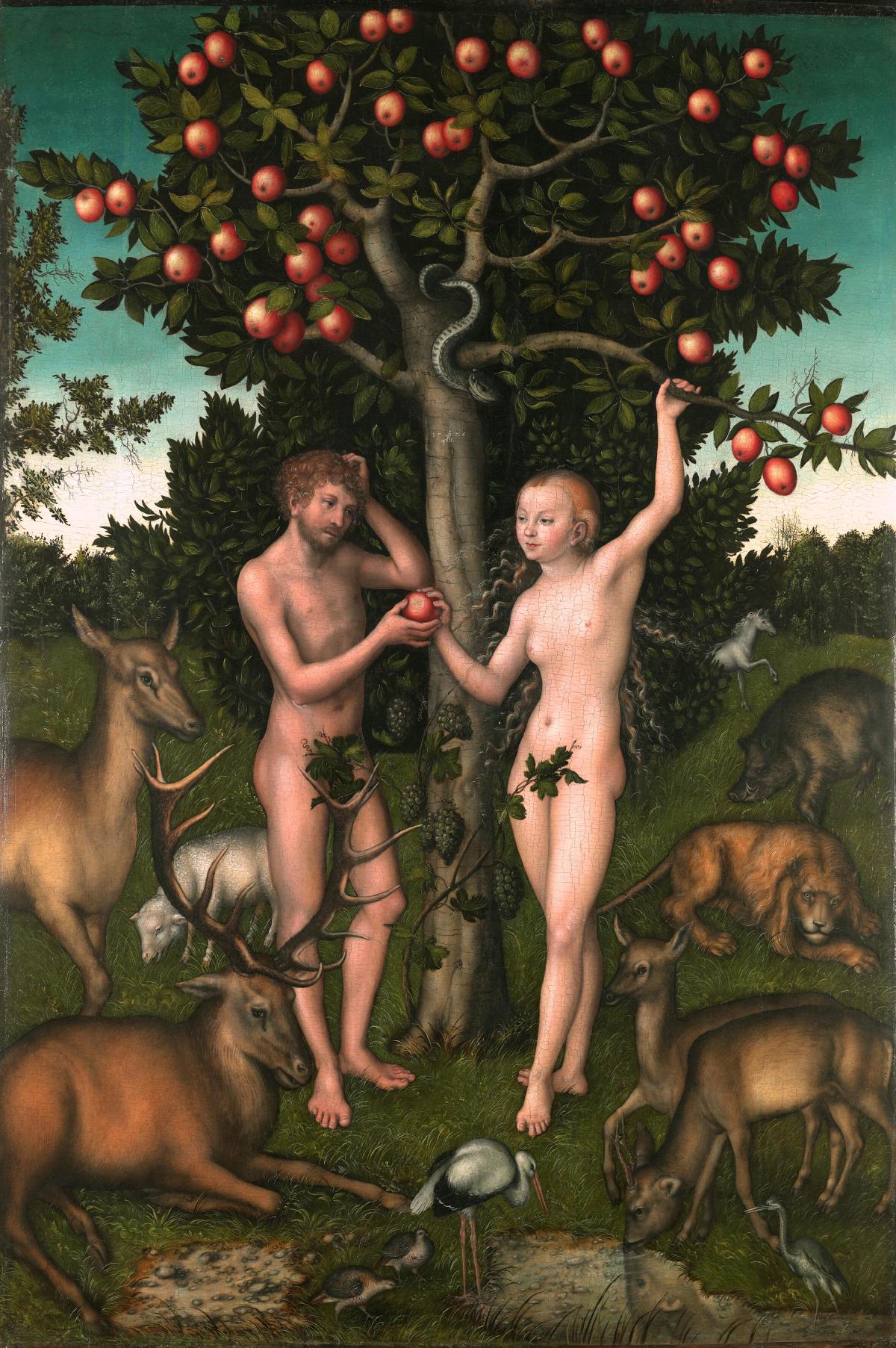
The Same Word Twice #
Two verses sit next to each other in Hebrew, and they end with the same sound.
“And they were both naked, the man and his wife, and were not ashamed” (Genesis 2:25). The word is arummim.
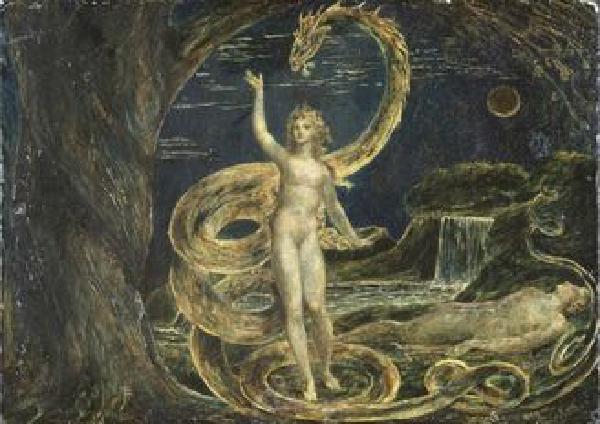
“Now the serpent was more subtil than any beast of the field” (Genesis 3:1). The word is arum.
Naked. Crafty. Back to back, identical to the ear, separated by nothing — the chapter division is a medieval addition and didn’t exist when this was written. A Hebrew reader hit those two verses in sequence and heard the same word describing two entirely different things: an unashamed man and woman, and the creature about to ruin them.
Strictly, these come from two roots that converged — one meaning bare, one meaning shrewd. It’s a pun rather than a shared origin. But the placement is not accidental, and the payoff four verses later removes any doubt about whether it was intended.
The Offer #
The serpent’s opening move is not a lie. It’s a question with a distortion baked into the premise: “Yea, hath God said, Ye shall not eat of every tree of the garden?” (3:1).
God had said the opposite. Every tree was permitted except one. The serpent inverts the ratio — turning near-total freedom with a single boundary into an interrogation about restriction — and Eve’s correction, while substantially accurate, already shows the frame working on her. She adds a prohibition God never gave: “neither shall ye touch it” (3:3).
Then comes the actual pitch, and it is not about fruit:
“Ye shall not surely die: For God doth know that in the day ye eat thereof, then your eyes shall be opened, and ye shall be as gods, knowing good and evil” (3:4-5).
Read what is being sold. Not knowledge in the abstract. Not experience. The capacity to determine good and evil — to hold the category-defining authority yourself rather than receive the categories from the one who made you.
That is the offer. Autonomy, marketed as an upgrade, delivered by a creature described one sentence earlier with a word that means the ability to appear as something you are not.
The serpent was selling his own defining quality. Be arum, like me.
What They Actually Received #
“And the eyes of them both were opened, and they knew that they were naked” (3:7).
Eyrummim.
The same word.
They reached for the serpent’s craftiness and received the other meaning. The eyes opened exactly as promised — the serpent did not lie about that — and the first thing the newly autonomous perception produced was the discovery that they were exposed.
They had been naked the entire time. Nothing about their bodies changed in that moment. Genesis 2:25 already told you they were naked and unashamed, and the word it used was the same word. What changed was that nakedness had become a problem, because the moment you are the one determining good and evil, you become a category you have to evaluate — and you are the first thing on the list.
They wanted the shrewdness. They got the bareness. Same syllables, opposite condition, and the distance between those two meanings is the entire fall.
The First Covering #
What they do next is the part worth slowing down on.
“They sewed fig leaves together, and made themselves aprons” (3:7).
This is the first manufacturing in human history, and its purpose is concealment.
Then: “Adam and his wife hid themselves from the presence of the LORD God amongst the trees of the garden” (3:8). The second recorded human initiative is also concealment — this time from the only being who had never been confused about their condition in the first place.
Called out, Adam explains himself: “I heard thy voice in the garden, and I was afraid, because I was naked; and I hid myself” (3:10).
He gives a reason that is true and an explanation that is false. He was naked. He had been naked yesterday and the day before and had felt nothing about it. The nakedness was never the problem and he knows it, which is why he is standing behind a tree, in leaves, addressing someone he used to walk with.
He is arum now, in the full sense — capable of presenting himself as something other than what he is, in real time, under direct examination, to the one being in existence who cannot be misled.
It took less than a chapter.
Adam Was Not Deceived #
There is a detail most retellings quietly drop, and dropping it makes the story considerably more comfortable than it is.
“She took of the fruit thereof, and did eat, and gave also unto her husband with her; and he did eat” (3:6).
With her.
He was there. Not in another part of the garden, not summoned afterward, not informed secondhand. He was standing beside her for the conversation with the serpent, for the distortion of God’s command, for the offer of autonomy, for the whole transaction.
Paul states the consequence plainly: “Adam was not deceived, but the woman being deceived was in the transgression” (1 Timothy 2:14).
Eve was worked on. The text says so twice — the serpent is the one called crafty, and her own account is “the serpent beguiled me, and I did eat” (3:13). She received the command secondhand, through Adam, and an operation was run on her by an expert. Her failure was real and she owned it without deflection, which is more than her husband managed.
Adam had the command directly from God, before she existed (2:16-17). He watched the entire exchange. No deception operated on him. He was not tricked, not confused, not misinformed.
He simply ate.
And then, asked what he had done, he blamed the woman he had failed to protect and the God who had given her to him.
Set their two answers side by side, because the contrast is brutal.
Eve, deceived by a professional, running on a command she’d received secondhand, says: “The serpent beguiled me, and I did eat” (3:13). Six words of explanation and then the admission, unqualified. She names what was done to her and then names what she did.
Adam, undeceived, holding the command firsthand, present for everything, says: “The woman whom thou gavest to be with me, she gave me of the tree, and I did eat” (3:12).
Count the moves. The admission is there, technically accurate, occupying the last three words — and it arrives only after two other parties have been arranged in front of it. The proximate cause is relocated to his wife. The ultimate cause is relocated to God, for supplying her.
He is standing in front of God, wearing leaves, having hidden in a tree, explaining that the arrangement was God’s idea.
The one who was genuinely deceived tells the truth about it. The one who wasn’t, doesn’t.
That is what the upgrade purchased. Eve was worked on by an expert and still managed a straight answer. Adam acquired the craftiness directly and used it within minutes, on God, about God.
The Voice He Listened To #
When God finally delivers the verdict on Adam, he names two things, and the order is worth noticing.
“Because thou hast hearkened unto the voice of thy wife, and hast eaten of the tree, of which I commanded thee, saying, Thou shalt not eat of it” (3:17).
The eating is there — and so is the command, restated in full, with I commanded thee making it unmistakably personal and unmistakably firsthand. But it isn’t what God leads with.
He leads with the voice.
Hearkened unto the voice of is not a casual phrase in Hebrew. It’s the standard construction for submitting to an authority — the same formula used again and again for Israel hearkening to the voice of the LORD, or failing to. It doesn’t describe being persuaded. It describes taking orders.
And that’s what God identifies first: not a moment of weakness, but a transfer of allegiance.
Adam had the command directly. It was spoken to him before Eve existed (2:16-17), which means she had it secondhand, through him. The line of authority ran God to Adam to Eve. In the transaction under the tree, it ran serpent to Eve to Adam — perfectly reversed, with the man holding the original instruction taking his cue from someone working off a copy, who was working off a distortion.
Which exposes what the offer actually delivered.
The serpent sold autonomy. Ye shall be as gods, knowing good and evil — determine the categories yourself, answer to no one, hold the authority. That was the pitch, and Adam bought it with his eyes fully open.
And the first thing he did with his new godhood was take instruction from a chain that terminated in a talking animal.
He did not become autonomous. He changed masters. The man who reached for the authority to decide good and evil ended up outsourcing the decision to the creature selling it, and God’s verdict names that inversion before it names the fruit.
That is the trade, and it has never once been executed differently. Nobody who reaches for autonomy arrives at autonomy. They arrive at a different voice, and the new one is always beneath them.
Ye Shall Not Surely Die #
The serpent made exactly one factual claim.
Not the part about their eyes opening — that was accurate. Not the part about knowing good and evil — they got that too, in the worst possible way. One claim, four words in the King James, offered as a flat contradiction of what God had said:
“Ye shall not surely die” (3:4).
Scripture audits that claim, and it does not do it with an argument.
Turn two chapters forward. Genesis 5 is the genealogy from Adam to Noah, and it is built as a refrain. A man lives, a man has sons and daughters, a man’s total years are counted, and then the chapter says the same four words about him.
And he died.
Adam lived nine hundred and thirty years. And he died. Seth, nine hundred and twelve. And he died. Enosh, Cainan, Mahalaleel, Jared — and he died, and he died, and he died, and he died. Methuselah makes it to nine hundred sixty-nine, longer than anyone before or since, and the chapter spends one clause on the result. And he died.
Eight times in one chapter. The same phrase, dropped at the end of every life, with no variation and no comment.
Nobody argues with the serpent. Nobody quotes the prohibition back at him or points out the contradiction. Scripture simply starts counting, and the counting is the refutation, and it goes on for a chapter, and then it goes on for the rest of the book, and then it goes on.
The one thing he said that could be checked was checked. It took a while. The result was unanimous.
Everything After This Is a Fig Leaf #
Once you have seen the shape of Genesis 3, it becomes difficult to stop seeing.
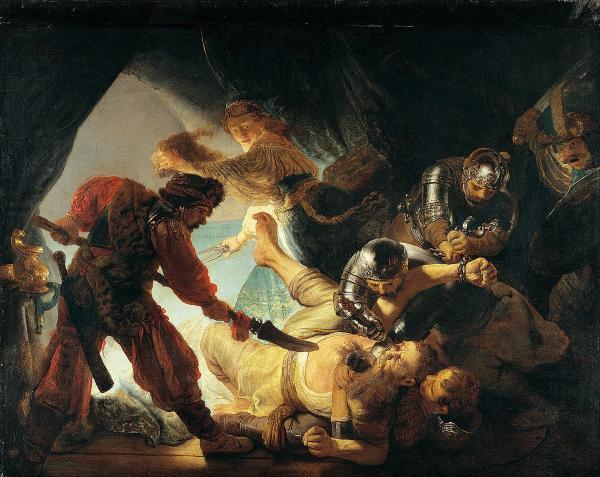
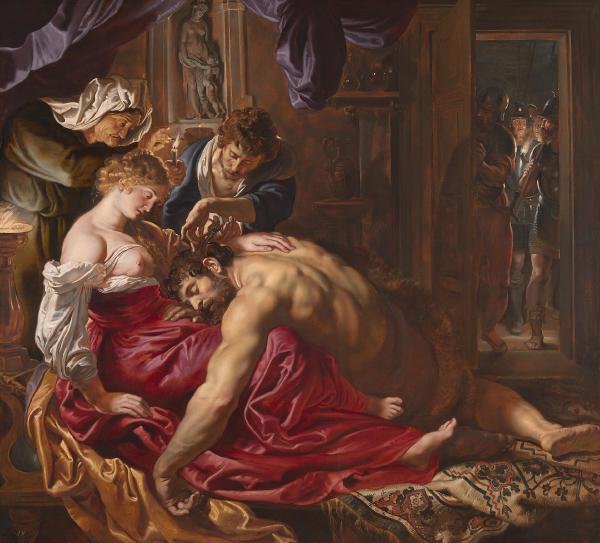
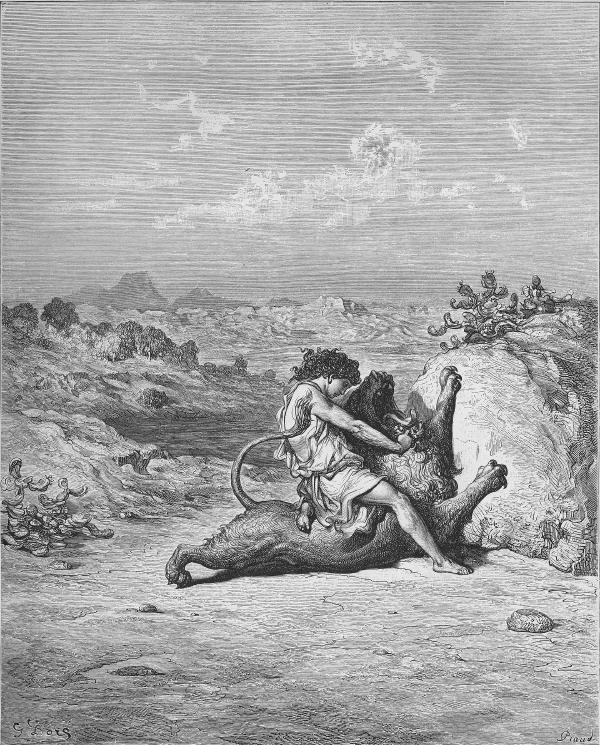
Samson kept the hair. Uncut for twenty years, the one visible sign of a Nazirite vow — while he ate honey scraped from a carcass, killed a thousand men with a corpse’s jawbone, and spent his strength on whatever was right in his own eyes. The marker was immaculate. The substance had been gone for decades. When they finally shaved him, they removed a sign that had long since stopped signifying anything, and he woke up and reached for what it stood for and found nothing there.
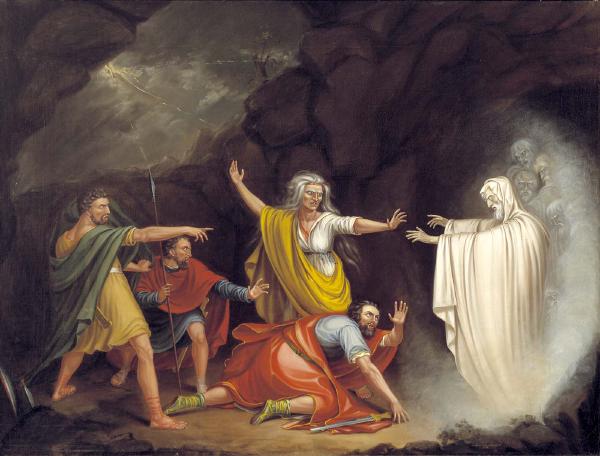
Saul kept the sacrifices. He offered the burnt offering at Gilgal when he should have waited. He spared the best Amalekite livestock and explained that it was for sacrifice. Samuel’s answer — “to obey is better than sacrifice” (1 Samuel 15:22) — names the exact mechanism. Saul kept the altar, the vocabulary, the crown, and the army, and on a specific day the Spirit departed, and he stayed fully credentialed for years with nothing behind any of it.
Both men were wearing leaves.
And the reason the pattern runs that way is that it was installed in the garden, by a creature whose defining characteristic was the ability to appear as something other than what it was, selling that same ability to two people who had never needed it — because they had nothing to hide, and no reason to, and were not ashamed.
They traded being seen for being able to manage how they were seen.
Every covering since has been an attempt to make that trade look like a good one.
The Word They Ended Up With #
The pun closes the way it opened.
They started arummim — naked, and fine with it.
They wanted arum — crafty, self-determining, like the serpent, like gods.
They ended eyrummim — naked, and not fine with it at all.
Same word, three times, and the only thing that changed across the whole transaction was whether being fully known was something they could survive.
That was the entire cost. Not the fruit. Not even the ground cursed for their sake, or the sweat, or the thorns, or the long walk out past the flaming sword.
The cost was that being seen became the thing they could no longer tolerate — and that the first thing they built with their new autonomy was something to hide behind.
What They Were Wearing When They Left #
God does not accept the leaves.
“Unto Adam also and to his wife did the LORD God make coats of skins, and clothed them” (3:21).
Something died to produce that clothing. The text doesn’t dwell on it and doesn’t need to — the first death in Scripture happens offstage, in a single clause, to cover two people whose own covering was inadequate.
They walked out of the garden wearing something they had not made, obtained at a cost they had not paid, provided by the one they had been hiding from.
Nothing a naked person manufactures can address the problem of being naked. That is why the leaves failed, why they have always failed, and why the covering had to come from the other direction — and it appears in the third chapter of the Bible, in one verse, without commentary.
Where Art Thou #
God’s first question to fallen humanity is a question he does not need answered.
“And the LORD God called unto Adam, and said unto him, Where art thou?” (3:9).
He knew. He knew where Adam was, what he had done, what he was wearing, and what he was about to say about his wife. The question was not an inquiry. It was an invitation to come out and say it — a door held open for a man who had just built the first wall in human history and gone to stand behind it.
Adam takes the door and uses it to explain why he needed the wall.
That’s the whole transaction, and it hasn’t changed since. God asks a question he already knows the answer to, because the answer was never the point — being willing to be seen was the point. And the newly autonomous instinct, the one purchased at the cost of everything, is to treat the question as an accusation and start arranging an account of yourself.
You are almost certainly wearing something right now.
Not fig leaves. The modern versions are more sophisticated, and most of them are sincerely held. A doctrine that guarantees your standing regardless of what you do with it. A decision made years ago, referenced in the present tense, functioning as a covering for a relationship that isn’t happening. An attendance record. A vocabulary. A marker that used to signify something and now mostly signifies that you’d rather not be asked.
None of it is a lie. That was never the issue. Samson’s hair really was uncut and Saul’s offerings really were offered.
The leaves work fine until you are asked to come out from behind the tree.
And the question is still being asked, and it is still not a request for information, and the one asking it is still the only one who can cover what it exposes.
Where art thou.